
What We’ve Learned and How You Can Prepare
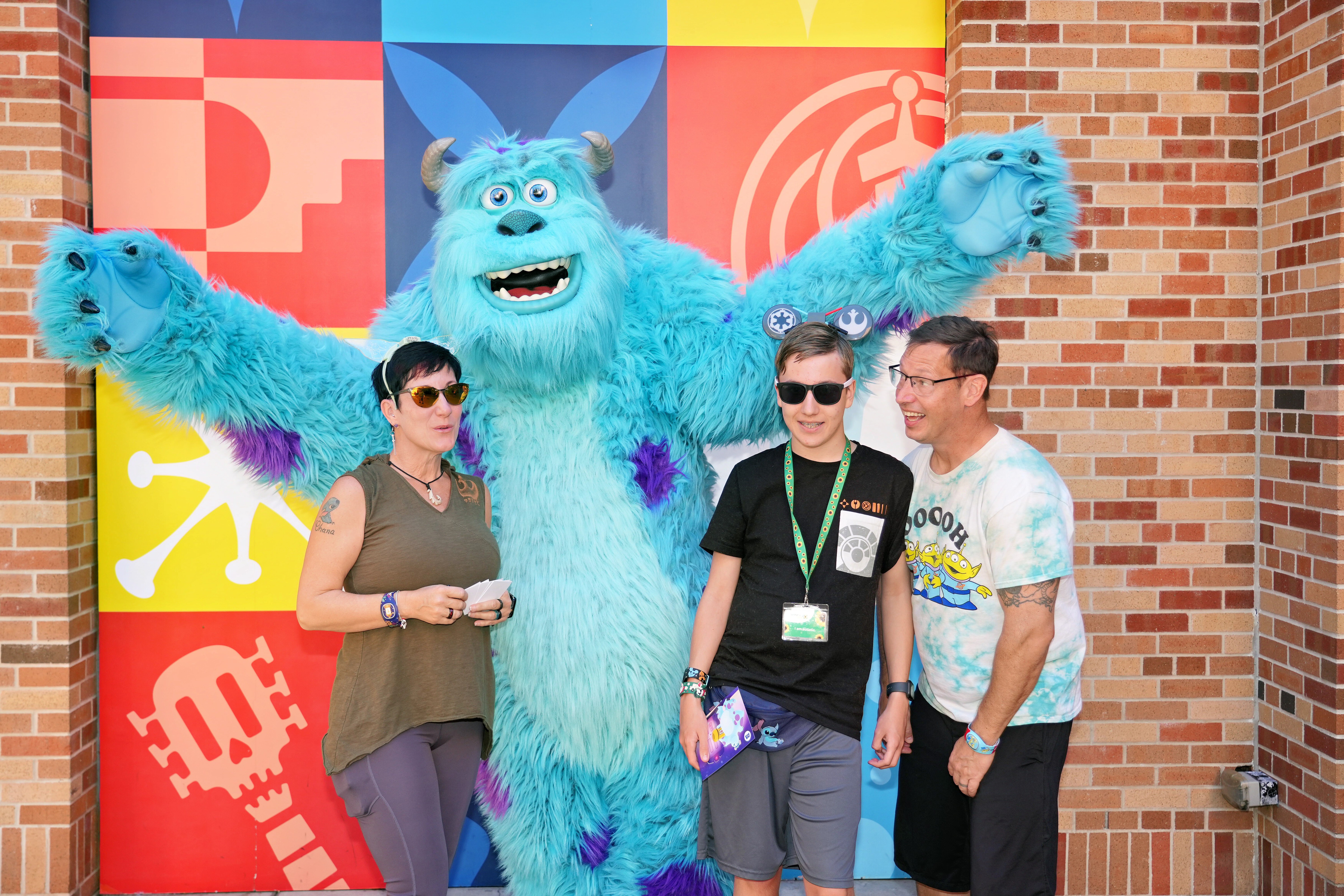
When we first took our autistic son, Aiden, to Disney World, I didn’t know what to expect. Navigating Disney with a child on the spectrum was challenging because he was a flight risk when he was younger, an eloper. So on that first trip, I simply held his hand the entire time. I was on high alert, hyper-aware of everything around us. It was overwhelming. But it was also magical.
One of the most terrifying moments for me came early in the trip—Space Mountain. It was his very first roller coaster, and I had no idea how he would react. I didn’t know if he’d love it, hate it, panic, or melt down. The second we launched into the dark, I was filled with instant regret and fear. It was pitch black, loud, and completely disorienting. I couldn’t see him. I couldn’t hear him. I couldn’t check in with him or reassure him. I spent the entire ride terrified, my heart pounding—not from the ride, but from the not knowing. Was he scared? Was he okay? Was I about to traumatize him?
Thankfully, when we got off, he was fine—better than fine. But I was shaken. That moment taught me just how important it is to thoroughly research rides and ease into new experiences slowly and thoughtfully, especially when navigating sensory sensitivities and unpredictability.
Over the years, Disney has become something like exposure therapy for us. A way to gently introduce new environments, social cues, sensory experiences, and even new foods, at a pace that works for him and for us.
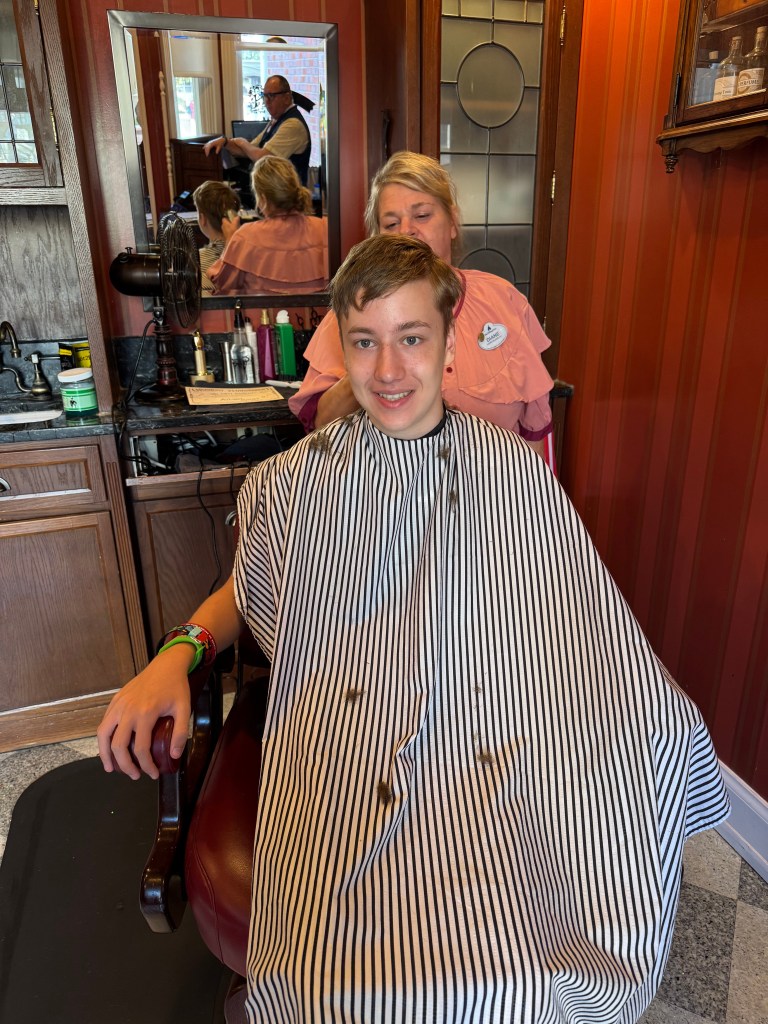
Safety First: Tools That Helped
If your child is a wanderer, there are tools that can offer some peace of mind:
- ID bracelets with your contact information (Kids ID Bracelets on Amazon)
- GPS tracking devices
- Leashes or harnesses, if they’re helpful and your child tolerates them
- Portable door alarms or locks at the resort to keep them safe overnight
Disney has a lot of water, lakes, lagoons, pools, and fountains, and autistic individuals are statistically more drawn to water. Be aware of your surroundings and know your child’s tendencies.
Sensory Tools: Headphones, Strollers, and Quiet Spaces
- Noise-canceling headphones were a lifesaver for loud rides and fireworks.
- Some parents use a stroller even when their child is past the typical age. Disney allows strollers and wagons with a medical tag, and that can make a huge difference for long days in the parks.
- We scoped out quiet spots ahead of time, areas to decompress, reset, and avoid overstimulation. These are gold.
Food Worries and Wins
My son was (and still is) a very picky eater. I worried about food, especially at character meals, what if we paid all that money and he wouldn’t eat anything?
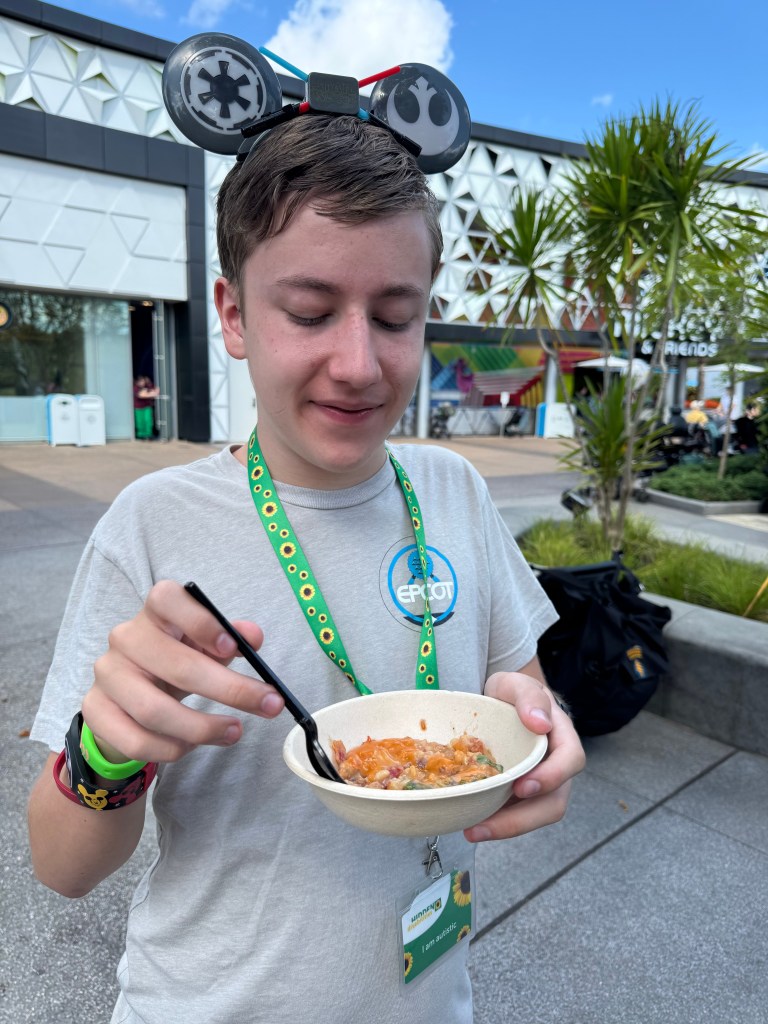
Turns out, Disney is the king of mac & cheese. And grilled cheese. And pizza.
We’ve never had trouble finding food he’ll eat, even if it meant paying the adult price for a bowl of noodles. And yes, that price tag hurt a little at first. But I had to shift my mindset: the cost isn’t just for the food, it’s for the experience. The smiles. The hugs. The moments. And those moments are priceless.

Behavior, Meltdowns, and the Stares
Not every day has been magical. There have been meltdowns, misunderstandings, and behavior issues—usually triggered by overstimulation or social cues that are still hard for him to grasp.
And yes, we’ve gotten stares. The uncomfortable kind.
But as a friend of mine, Kayla Castro, who’s a special needs travel agent, once told me: “It’s not just about exposing your child to the world. It’s about exposing the world to your child.”
I carry that with me. He deserves the joy of Disney. And so do I.

Disability Access Service (DAS)
One of the most helpful tools for families like ours is Disney’s Disability Access Service (DAS). This program is designed for guests who can’t wait in a traditional queue due to cognitive, developmental, or sensory conditions like autism.
Here’s how it works: Instead of standing in a queue, you receive a return time for the attraction—kind of like a virtual wait. During that time, you can take a break, find a quiet space, grab a snack, or enjoy another area of the park. Once it’s your time, you return and enter through the Lightning Lane.
Pro Tip: DAS registration can now be done online up to 60 days before your first park day via video chat. (Registering for DAS) Be prepared to share your child’s unique challenges. You’ll need to advocate clearly and honestly about their needs. It’s not always easy to be vulnerable with a stranger, but Disney Cast Members are generally compassionate, and the support DAS offers can make a huge difference in how your day flows.
🚩 Prepare for Unexpected Sensory Challenges
Even the most ordinary moments at Disney can turn into sensory minefields when you’re traveling with an autistic child. Some of the things that caught us off guard include:
- Hand dryers in restrooms (they’re LOUD—like jet engine loud)
- Self flushing toilets (bring Post It notes to cover up the sensor)
- Dark rides that suddenly blast sound or unexpected effects
- Crowd surges during fireworks or parades, which can feel overwhelming or even scary
These can trigger meltdowns or sensory overload if you’re not prepared. One thing that helped us was planning ahead for fireworks viewing.

Pro tip: Each park offers designated handicapped viewing areas for nighttime shows, including Magic Kingdom, EPCOT, and Fantasmic at Hollywood Studios. These sections are roped off and reserved for guests with disabilities, including families using wheelchairs, medical strollers, or with DAS. Space is limited, so I recommend arriving at least an hour early to secure a spot. You can locate these areas on the Disney map (look for a symbol similar to this ♿️).
Planning Tips That Helped Us
- Avoid peak heat and crowds: Go early in the morning, take breaks during the hottest part of the day, return later if you can.
- Use crowd calendars and park opening strategies to plan lower-stimulation windows.
- Research rides with lower sensory load or those to avoid based on your child’s sensitivities.
- Visit the Disney accessibility page for attraction-by-attraction sensory info. (Walt Disney World Sensory Guide)
- Practice makes progress: We treated Disney like a learning journey. Exposure to new foods, sounds, textures, and people—at his pace.
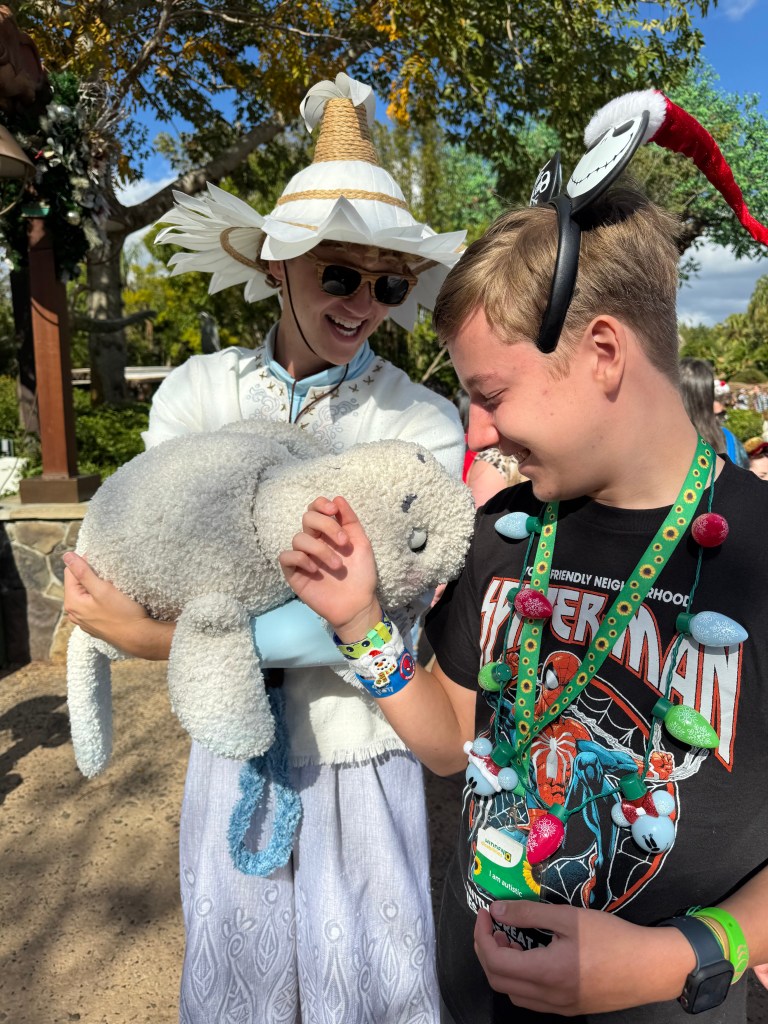
🛍️ Pack the Right Gear
Packing for Disney is always an adventure—but when you’re traveling with an autistic child, the right gear can make or break your day.
Here’s a quick list of essentials that helped us (and might help you too):
- Extra clothes – for spills, sensory discomfort, or unexpected messes
- Familiar snacks – because sometimes the comfort of a favorite food is the best reset
- Fidget toys or sensory aids – something to hold, squish, or focus on during lines or transitions
- Comfort items – a favorite stuffed animal, small blanket, or toy that brings calm
- Cooling towels or misting fans – especially if heat is a trigger for overstimulation
- Noise-canceling headphones – for fireworks, rides, crowds, hand dryers, or just life in general
We kept a backpack (or you could use a stroller organizer) stocked and ready each day. You can’t plan for everything, but having a few familiar tools on hand makes it easier to adapt in the moment.
🧩 Help Your Child Prepare Before You Go
One of the best things we did—especially before our first visit—was take time to prepare our son for what Disney World would be like. For autistic kids, predictability equals comfort. The more they know what to expect, the more confident and relaxed they’ll feel.
A couple of things that might help:
- Visual schedules or picture-based checklists – These are great for showing the flow of the day: “first breakfast, then the bus, then Magic Kingdom,” etc.
- Social stories – These are short, personalized narratives that walk your child through specific scenarios in a calm, reassuring way. Things like “what it’s like to meet Mickey Mouse,” “going through security,” or “waiting in line for a ride.”
We found that previewing what was coming—both through pictures and simple explanations—reduced anxiety and improved flexibility during the trip. Even if your child doesn’t fully grasp every detail, giving them a framework helps turn the unfamiliar into something they can handle.
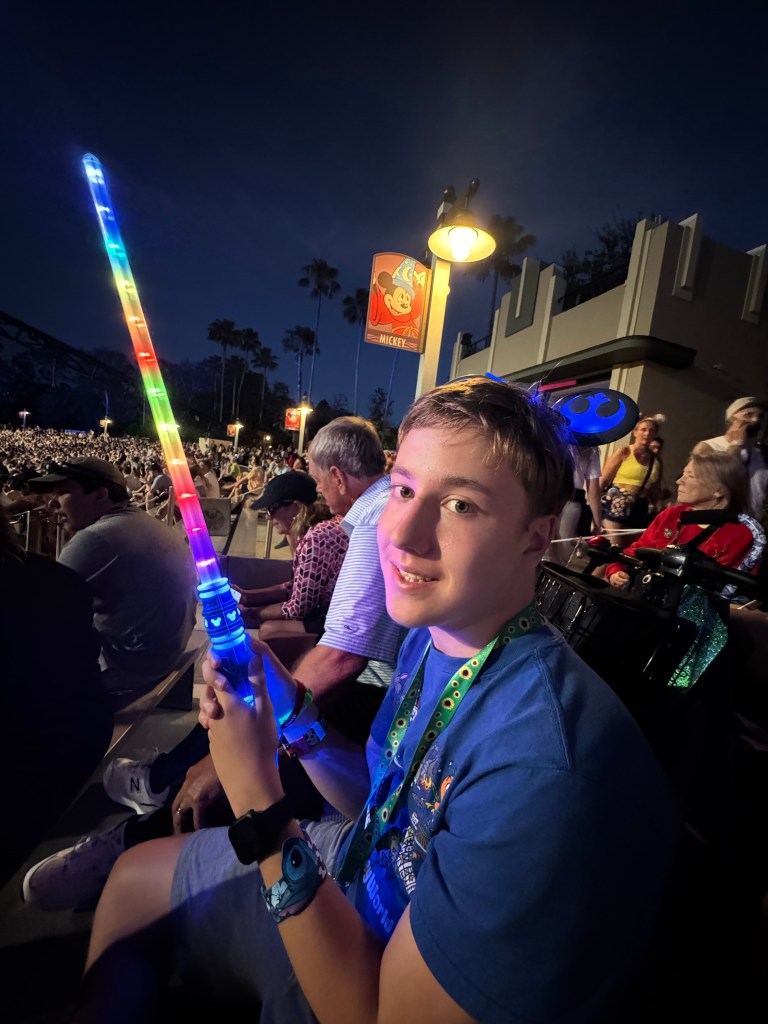
Cast Members: Unexpected Magic
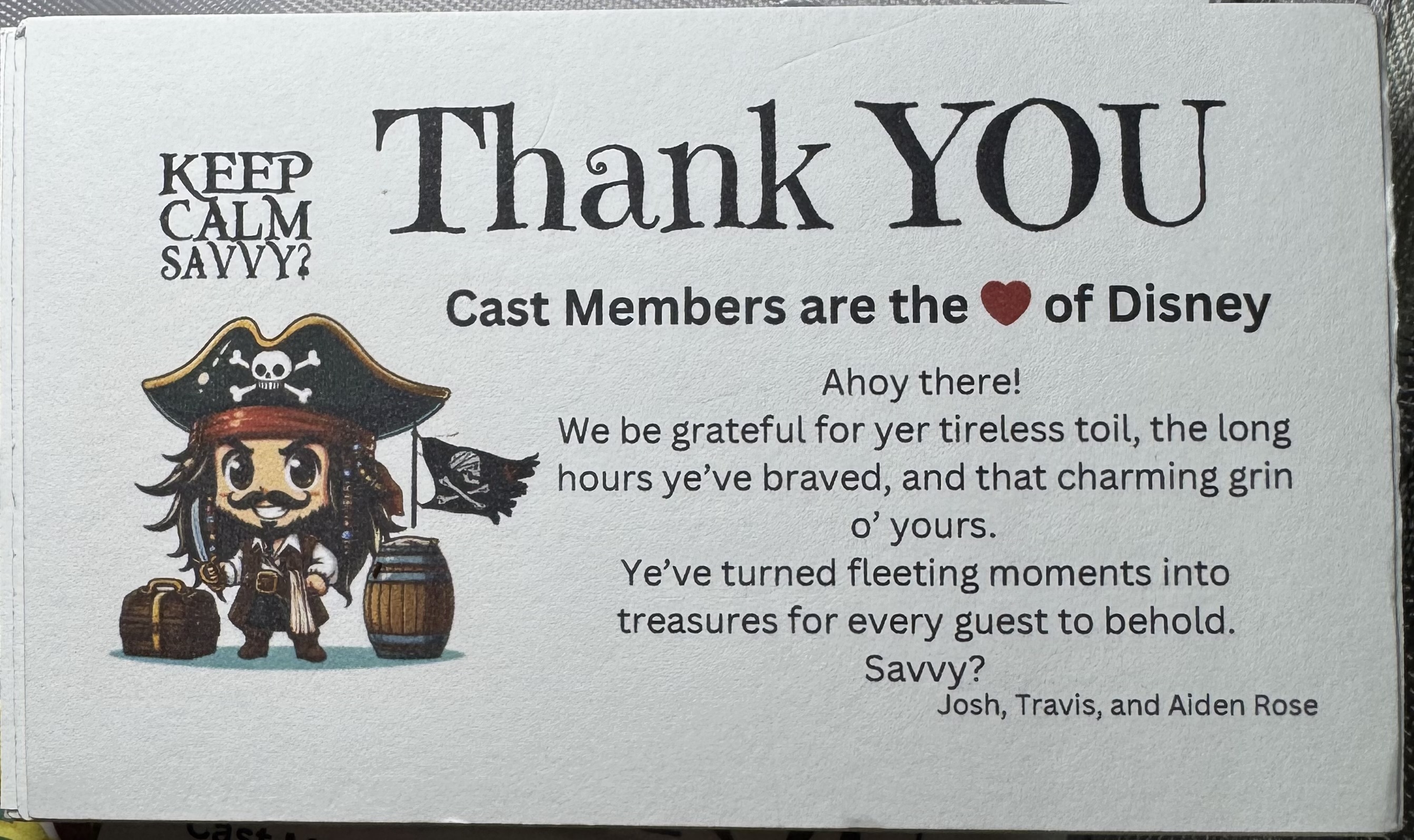
Some of our most touching moments weren’t with characters—they were with Cast Members.
A lifeguard at Typhoon Lagoon, seeing that my son was struggling to communicate after an injury, gently told me he had an autistic brother and handled it all with calm understanding. A CM in Galaxy’s Edge shared that her brother was also autistic, and she went above and beyond to make our son feel included. Another Cast Member was autistic himself—and Disney had given him a role where he could share his deep knowledge of animals with guests. It was his superpower. And it was beautiful.
🧘️♀️ A Note for Parents and Caregivers
This one’s for you.
Navigating the world with an autistic child can be beautiful—but let’s be honest, it can also be exhausting. You carry the bags, the plans, the snacks, the what-ifs, and the meltdowns. You advocate, anticipate, and absorb. Sometimes, you’re managing your child’s needs while trying to hide your own stress—and that can take a toll.
On our first trip, I was so focused on making things perfect for my son that I almost had a panic attack on Space Mountain—not from the ride, but from the weight of it all.
So here’s your reminder:
- Take turns having downtime if you’re traveling with a partner or support person. Tag out when you need to.
- Bring something comforting for yourself, too—a favorite drink, headphones, a backup plan you know you can fall back on if things go sideways.
- And most importantly, be gentle with yourself. Meltdowns don’t mean failure. They don’t cancel out the magic. They’re just a moment—a hard one, yes—but one of many on a journey filled with growth, love, and joy.
You’re doing a great job. And you deserve to enjoy Disney too.

Final Thoughts
Going to Disney World with an autistic child takes extra planning. It’s not always easy. But it’s more than possible—it can be profoundly healing and joyful.
If you’re hesitant, I get it. But your child deserves magic too. And so do you.
If this post helps even one family feel a little more prepared or a little less alone, then it was worth writing.



Leave a Reply